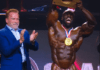


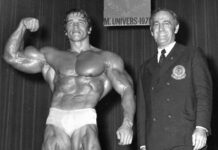







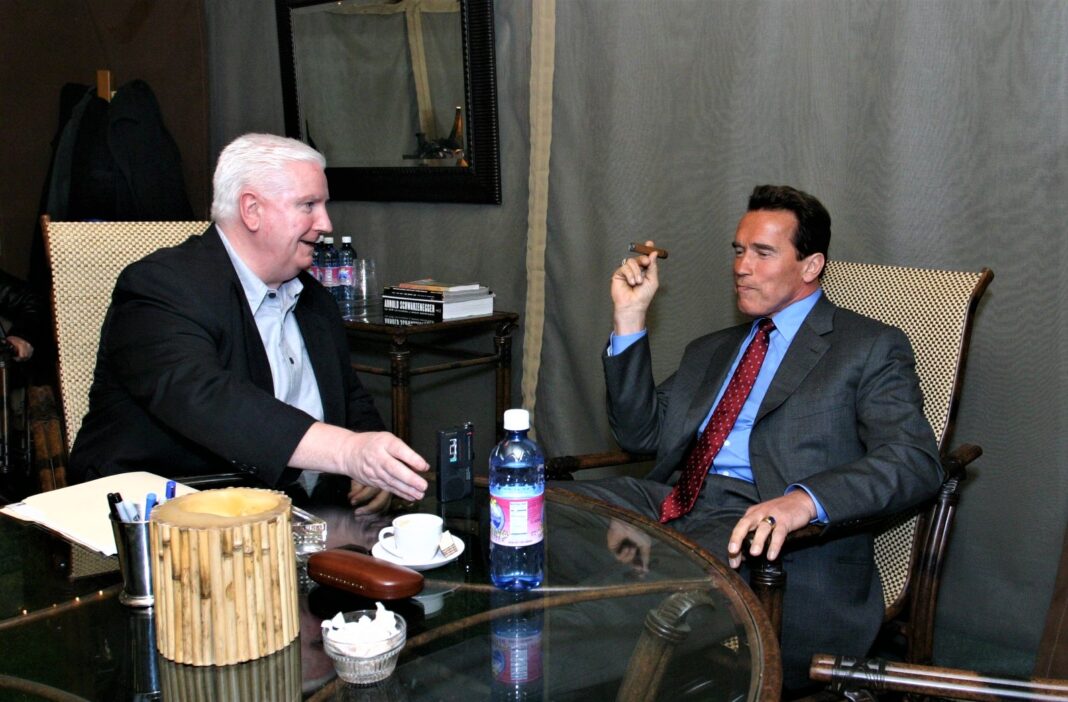
Peter McGough interviewing California Governor Arnold Schwarzenegger in 2005.
For the Love of Pete. For Pete’s Sake. Give Pete a Chance. In a perfect world, this memorial would be titled with a McGoughian pun, but then, in a perfect world, Peter McGough would still be alive, joking, writing, editing, mentoring, laughing. After a valiant seven-year battle with cancer, Peter, the giant of bodybuilding journalism, died on December 29 at age 71. And so we celebrate a remarkable life and career.
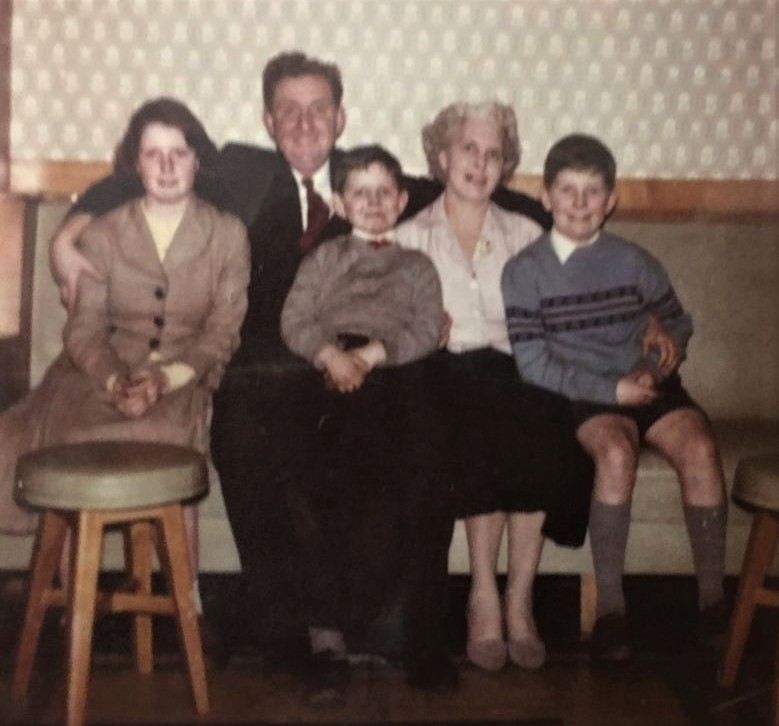
Peter McGough was born in Corby, England, on August 24, 1949, the son of Scottish immigrants and the middle of three children. The family moved frequently around central England as his parents held numerous jobs (his dad was also an amateur fiction writer). Peter was the quiet child. Of his father, a World War II combat veteran with an indelible work ethic and contagious sense of humor, Peter said: “I idolized him. Growing up, I admit that in his presence I retreated into myself, unable to compete with the strength of his personality….I started work at 15 in Nottingham, and the company had a Christmas get-together for staff and family. True to form, my dad started amusing some of my workmates, and they told him, ‘We see where Peter got his humor from; he’s just about the funniest guy in the building.’ He was surprised because he never saw me thrusting myself forward in a crowd to crack a joke. Later, I learned he worried about my shyness. But how could I compete with him?”
In his vivid prose, Peter recalled a seminal event:
“I know we all remember that first moment, that first recognition that the iron bug had bit and the course of our life had changed forever. It’s similar to the first time you…well, never mind. My first entry into a gym for a bona-fide workout, was in July 1969, in my hometown of Nottingham, England. I was 19 and my mentor was Big John Courtney, who was two years older than me….He’d long tried to persuade me to have a workout, but I declined; soccer was my game. I didn’t want to be musclebound—such were the times. But I’d got into reading Joe Weider’s Muscle Builder/Power, and, increasingly, I wanted to give the weights a shot. Thinking that I’d be looked down upon by all the gym habitués, I trained for a few weeks in my bedroom using five-gallon paint cans as dumbbells. Holding the cans, I’d do curls, squats, lateral raises, overhead presses, two-arm extensions, and one-arm rows. Jeez, I was the MacGyver of working out. Came the day for my gym debut, it was a hot Saturday afternoon as John took me into the labyrinth of an old terrace house that was Lake Street Gym. It was a broken-down, rundown, smelly, no-shower of a place above an electrician’s shop. Despite my former fears, surprisingly, all the assorted muscular brutes in there were remarkably friendly to a newcomer. You learned very quickly the empathy of gym rats: No matter how big they got, they always remembered their first time, as well. John put me through a 40-minute workout in which I trained every bodypart with two or three sets of an exercise. I distinctly remember doing seated behind-the-neck presses on a power rack as Steppenwolf’s Born To Be Wild blared out of a beat-up transistor radio….It was Thursday before I could properly straighten my limbs and the muscle soreness had gone. But that night—a wiser and less ambitious man—I was back in the gym training to John’s beat. The bug had bitten, and the infection would last for life….I came to love bodybuilding and bodybuilders, and I would devour the mags, little knowing that that’s where my future lay. As John Lennon so rightly sang, ‘Life is what happens to you when you’re busy making other plans.’ And so it goes.”
Wasting no time, Peter saw his first bodybuilding contest merely two weeks after that initial workout, and he met the namesake of that show, the legendary Mr. Universe and cinematic Hercules, Reg Park. And, just like that, the neophyte weight-trainer became a bodybuilding fan. Just a few months later, he attended a seminar by a young phenom then taking the muscle world by storm, Arnold Schwarzenegger. At the 1971 Pro Mr. Universe in London, he was shouting when Bill Pearl defeated Sergio Oliva (and Reg Park and Frank Zane). He was witnessing, up close and personal, bodybuilding’s first golden age.
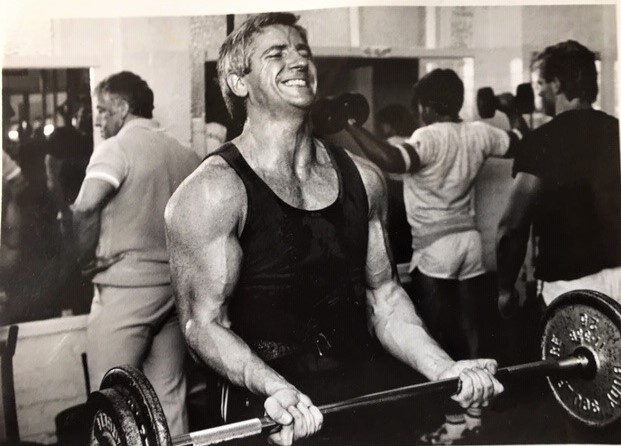
Like Joe Weider, another working-class overachiever, Peter gave himself a “college education.” He read history, philosophy, and fiction (Colin Wilson and Hermann Hesse were favorites) along with muscle mags. Long wanting to be a journalist, he sold articles in the ’70s while toiling in other jobs in Nottingham. He ran marathons and played soccer. In 1980, he began fulfilling his future foretold, combining his affinity for both words and weights by freelance writing for muscle magazines, first in the U.K. and, beginning in 1984, for MuscleMag and FLEX in North America. One small paycheck at a time, he honed his skills. Just after midnight on March 31, 1985, he met Anne Byron, his future wife and constant companion for the second half of his life. He later said his only regret was he didn’t meet her sooner. From 1985 to 1989, Peter co-published the British magazine Muscle & Co. and wrote its best articles, such as the one that chronicled him spotting Tom Platz for what seemed like a thousand forced reps during a ludicrously intense, midnight, back workout.
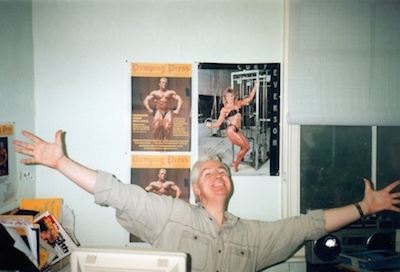
In 1991 in Nottingham, Peter and Anne launched Pumping Press, a monthly tabloid newspaper that called itself “The True Voice of Bodybuilding” and came with a warning label on every cover: “DANGER: If you like your bodybuilding sweet and innocent—this publication is not for you!” It scooped the competition with news and gossip, showcased Peter’s pun-tastic sense of humor, and rushed out contest results and photos in only a week in that pre-internet dark age when fans waited two months for news in magazines. Pumping Press lasted only nine issues, but that’s because its greatest accomplishment was impressing Joe Weider, whose job offers relocated Peter and Anne to Southern California in 1992.
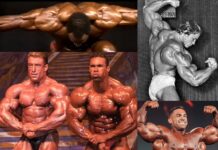
Peter, a senior writer at FLEX, was used to doing things his own irreverent way in England, and he initially struggled to find his place in the Weider conglomerate. Even the museum-like office building awed him (it always would). One evening, Joe Weider saw Peter dejected at his desk and asked what was wrong. Peter told him. “I brought you here for your sarcasm,” Joe replied. “Wow, it’s great to feel wanted,” Peter quipped. But that conversation was the genesis of Hard Times, FLEX’s pun-laden news and gossip section that allowed Peter to expand upon Pumping Press’s promise. The ’90s were the second golden age of bodybuilding, and the decade found its greatest chronicler in Peter McGough. From fan’s-eye contest reports to the Temple tales of fellow Englishman Dorian Yates (Peter also authored Yates’ second book), Peter penned many of FLEX’s best articles. He was justly proud of his superb 1995 profile of Mike Mentzer (see below), which captured the highs and desperate lows of a very troubled champion.
In 1997, Peter was named editor-in-chief of FLEX and further expanded the magazine’s dominance over the competition. He remembered:
“This was the job of a lifetime. That was my baby. I couldn’t do enough for that magazine. We had a great team. Back then, in terms of publishing, it was now or never. People weren’t getting their news from 100 different sources. They were relying on us for new and different information. I wanted to take the readers where they couldn’t go. They could see so much from images, but there’s a story behind everything. There should be a beginning, a middle, and an end. I used the magazine to narrate the bodybuilding stories.” In addition to his editing, design, and writing duties, he was a mentor to and advocate for a generation of writers, photographers, and bodybuilders too numerous to mention. Many of us saw him as a surrogate father in the same way he (and Arnold) saw Joe Weider. Of Joe he said, “He would call me from his office twenty yards from mine, and in that much-imitated voice would ask, ‘Can you spare me a few minutes?’ Can I spare Zeus a few minutes? The teenage backstreet kid still lurking inside me would think: Are You kidding me? It was always longer than a few minutes as I sat in his office listening to his stories, and he never ceased to amaze me.”
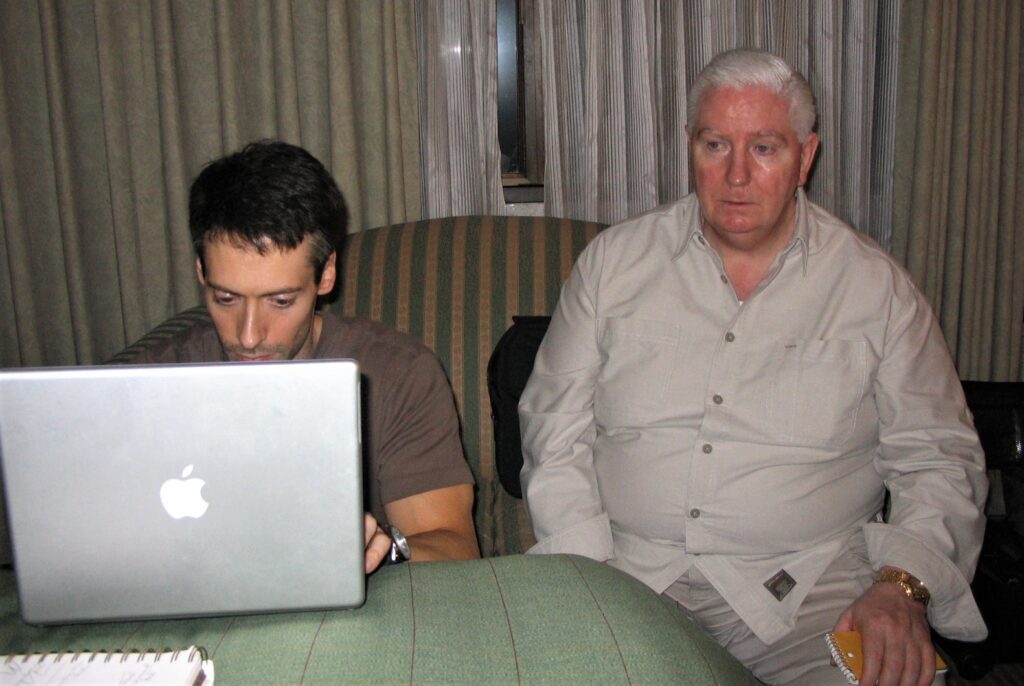
In 2006, Peter was elevated to editorial director of Muscle & Fitness and Muscle & Fitness Hers in addition to FLEX. The shy but scrappy kid from Nottingham had climbed his way to the summit of bodybuilding journalism. Governor Schwarzenegger was on speed-dial. That said, he admitted later that editor-in-chief of FLEX (“my baby”) was as high as he ever wanted to rise, and, when long days were overtaken by budget meetings, advertiser calls, and managerial matters, he missed the simpler times when he could focus just on writing and when he traveled to more bodybuilding contests. In this way, he was also similar to Joe Weider. He stepped down from his high perch in late 2008 and left the company the following year.
Relocating with Anne to Florida, Peter initially wrote again for MuscleMag. He was, from 2012 to 2017, a senior writer for Muscular Development, where he penned some 450 articles, often recounting his own amazing experiences. He also did numerous video and audio interviews, on both sides of the microphone, and performed contest commentary. And all the while, from 2013 on, he was battling stage four cancer. “I know this to be true,” he wrote five years ago. “If you have a fight on your hands—be it physical, mental, spiritual, medical, or whatever—don’t step back. Step forward and give it all you’ve got. If you have to go down, go down swinging. Otherwise, you’ll always regret that you didn’t give it your best shot.”
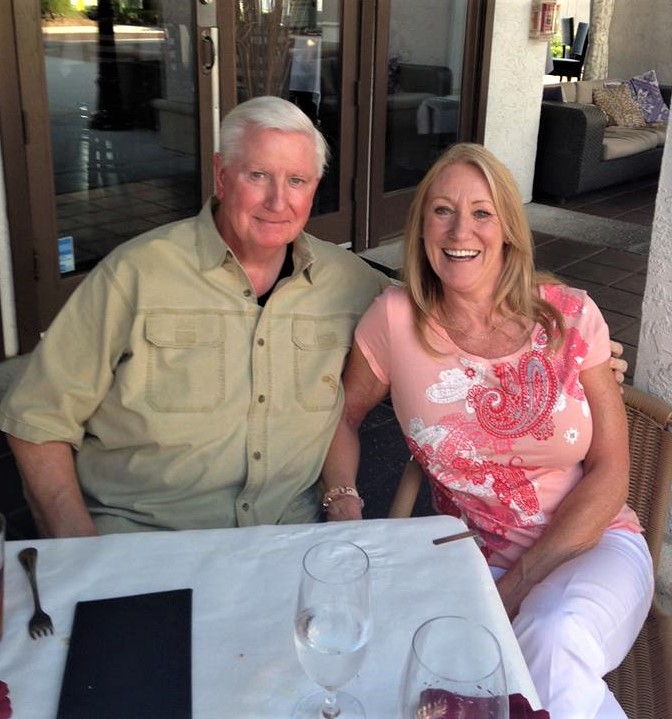
In his final years, fighting all the while, Peter returned to write again for FLEX and Muscle & Fitness. Sometimes, in our long conversations, he spoke wistfully about younger, healthier times when he was first a writer at FLEX or when, a few years later, he was running that mag, all the top Olympia finalists were Weider athletes, and FLEX was the one publication every serious bodybuilder around the world had to read. “We make the stars,” Peter said in editorial meetings. It wasn’t a boast. It was a recognition of the power “his baby” had in the ’90s and ’00s before social media. “We got to work with guys like Flex Wheeler, Ronnie Coleman, and Jay Cutler, and we told their stories. We went to their homes; we went to their gyms. At contests, we took you into their hotel rooms and backstage. We built on their personas. With Dorian [Yates], I nicknamed him ‘The Shadow’ and built on that, this sense of mystery. We cultivated all the drama, conflict, and controversies, and their personalities, which made things more exciting.”
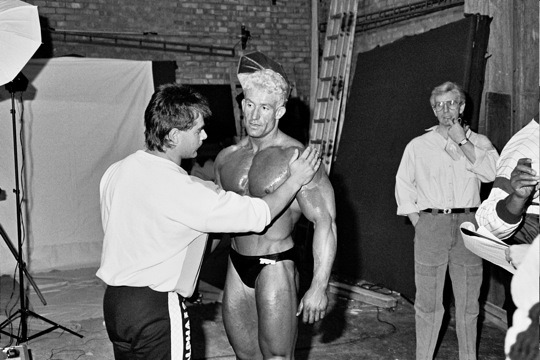
Back then, he was happiest in a gym, like Temple in 1993 at a workout photo shoot when Dorian Yates (in black socks) revealed a level of jaw-dropping mass never encountered before, or in a dark press pit (where his snowy hair was always a beacon) on those rare occasions when even he was wowed (example: Phil Heath, 2008 Ironman Pro), or in the Weider headquarters—bodybuilding’s museum—when he took the latest, wide-eyed phenom—say, Flex Lewis—on a tour that ended in Joe Weider’s ornate office and Peter, as always, felt the same thrill they did. And he was happiest, too, when the first box of the latest issue arrived at the office. “The great thing about making a magazine,” he said, “is I’m able to hold it in my hands. After creating something brand new every month, you see it born.” He wouldn’t inform cover models of the honor they were receiving, and, before their issue hit newsstands, he’d overnight them a box of the magazines with a personalized note he’d written—a blissful surprise package that could literally launch a career. He had a preternatural ability to recall the issues and even the pages that articles or particular photos appeared on years earlier, because he could remember the way each issue was carefully constructed, and because he just cared, as he’d say, so bloody much. Peter, like Joe Weider before him, knew from personal experiences that for some readers, a muscle magazine was a portal to a previously mystical world, and it was a blueprint for fulfilling their dreams.
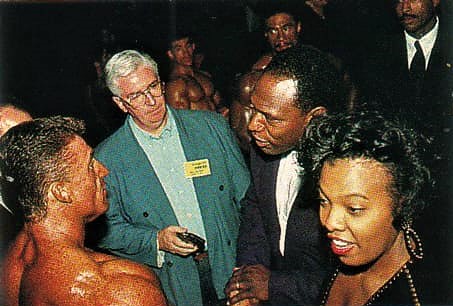
The past fades, but the memories of Peter McGough will persist. Because I lost my father when I was young, it doesn’t take a therapist to tell me why I found a father figure in him. But I shared that feeling with many others, including more than one Mr. Olympia, most of whom have dads but thought of Peter as their second one. Whether a muscle journalist, a pro bodybuilder, a contest promoter, or, over four decades, a reader of his prose, we all benefited immensely from his advice, his advocacy, his humor, and his insights. He was the keen-eyed observer, the giant of bodybuilding journalism, forever searching for the scoop, the next big thing, the awe-inspiring photo, the perfect pun, the angle or insight no one else could see, or, if they could, they couldn’t translate it into words the way he could. He made bodybuilding funnier, smarter, kinder, better. The Barbell sends its condolences to Anne but also to the entire bodybuilding world. Some of us lost a surrogate father, but all of us lost a truly great friend.